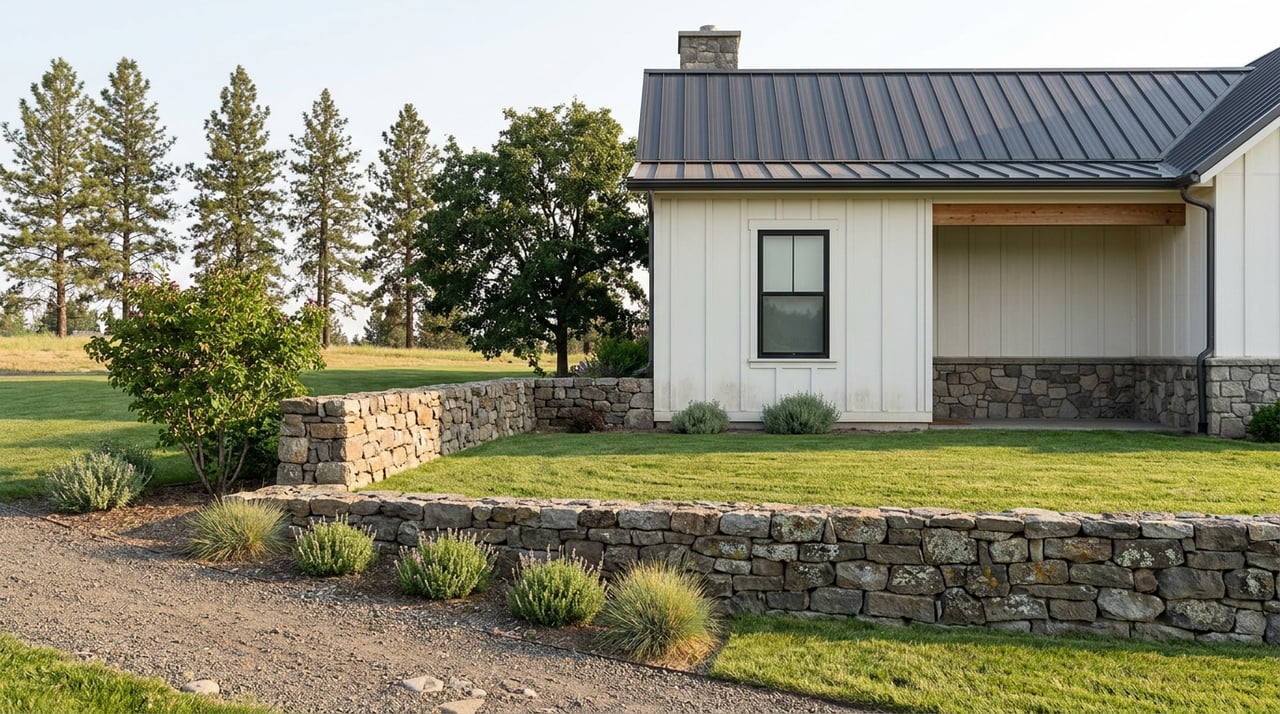
Scroll through West Bench listings this year and you'll notice a strange sentence creeping into the copy: this property is not impacted by the proposed water system replacement in the area. It reads like boilerplate. It isn't. Sellers are writing that line because buyers have started asking, and the honest answer to that question now depends on which side of an invisible boundary a given parcel sits on.
"West Bench" gets used as a single name for a stretch of bench land above Penticton with big lots, lake views, and a rural feel. But it has never been one water system, and after a vote this spring, the gap between its two systems stopped being a technicality and became a fact buyers need to price in.
Two Systems Wearing One Name
The bulk of West Bench draws treated water from the City of Penticton under a long-term supply agreement that, according to the Penticton Herald, runs until 2037. The Regional District of Okanagan-Similkameen operates the distribution side, pumping city water through a booster station on West Bench Hill Road to roughly 1,100 residents across about 350 connections. The mains have been fully replaced, backup power is now in place at the booster station, and every property on the system has a new meter. It's a public utility with a public track record and a contract that has more than a decade left on it.
Sage Mesa is a different animal entirely, and it sits inside the same general area people call West Bench. It serves around 242 properties at the north end of what planners call Greater West Bench, and it draws its water straight from Okanagan Lake and treats it with chlorine. The water license goes back to the 1960s, and the system has operated under the province's comptroller of water rights since 1990. Roughly 60 of those homes have lived under a permanent boil water advisory because the treatment process can't consistently meet Interior Health's standards, and hydrant pressure across the system doesn't meet fire protection requirements either.
Same neighbourhood name. Two completely different infrastructure realities.
What The April Vote Actually Settled
For most of the past two years, Sage Mesa's future was an open question. Voters were asked to decide whether the RDOS should take over the system and borrow up to $33,034,000 to bring it up to standard, spread over 30 years of debt financing. That vote happened on April 11, 2026, following advance and mail-in balloting. It failed by a wide margin, 317 votes against to 136 in favour. The RDOS board formally accepted the result and abandoned the takeover bylaws at its May 7 meeting.
That outcome didn't just delay an upgrade. It closed off a funding path. Sage Mesa is privately held, and the funding for whatever fixes the boil water advisory and the hydrant pressure problem has not been finalized. A proposed class action, filed in March by Klein Lawyers on behalf of a resident against the water system and the provincial Ministry of Water, Land and Resource Stewardship, is still working through the courts and hasn't been tested.
In a Keremeos Review report, Riley Gettens, who represents Greater West Bench on the RDOS board, put words to what that reversal felt like for residents who'd been counting on a public fix:
"It felt like the rug was pulled out from under them."
That's not a line about pipes. It's a line about people who bought acreage expecting a resolvable infrastructure problem and got an unresolved one instead.
Why The Listing Language Changed First
Real estate copy usually lags behind news. This time it didn't. Sellers on parcels served by the RDOS West Bench system started adding language distancing their listings from the Sage Mesa situation months before most buyers understood there were two systems to begin with. That's a signal worth reading on its own: the people closest to these transactions already treat water service area as a material fact, not a footnote.
It shows up in the zoning too. A West Bench listing describing a two-thirds acre lot with lake views notes it's zoned P1 and fully serviced with natural gas, municipal water, electricity, and septic. Municipal water paired with septic isn't a contradiction here. It reflects the reality that treated water reaches these lots through the RDOS system, but there's no municipal sewer running up the bench, so wastewater is still handled on-site. A different listing for a 3.37-acre property marketed toward horse owners and hobby vineyards specifies it sits outside the Sage Mesa water service area entirely and relies on a septic system installed in 2017. Neither of these is better or worse on its face. They're just different infrastructure packages wearing the same neighbourhood name.
Before you compare two West Bench lots on price per acre, get specific about what's actually attached to the title. A short list of what to ask for on any parcel you're serious about:
- Which water system serves this specific address, and is that documented in the title or disclosure statement, not just assumed from the mailing address
- If it's the RDOS system, confirmation of the connection type (domestic, agricultural, or commercial) and current meter status
- If it's Sage Mesa, whether the address is one of the roughly 60 properties currently under boil water advisory
- Septic age, inspection records, and whether the system was installed under current regulations
- Current zoning designation (P1, SH3, SH5, RS5, and so on) and what that means for subdivision potential or future outbuildings
The Zoning Layer Underneath The Water Question
Water isn't the only thing shaping what a West Bench parcel can become. In 2021, engineering firm Ecora and Clarke Geoscience completed a geotechnical review of the greater West Bench area that the RDOS commissioned after a 2018 policy update called for a fresh hazard assessment using modern methods like LiDAR. The findings led the district to propose zoning changes still working through adoption: a minimum 2.0-hectare parcel size for any subdivision in the SH5 and RS5 zones, and a ban on new pools, ponds, and water features in the SH5 and SH6 zones.
If you're looking at acreage with an eye toward eventually splitting the lot or adding a pool for resale value, the zone designation matters as much as the water system does. A large parcel that looks flexible on a map may already carry restrictions that weren't in place when the last owner bought it.
Reading The Number In Context
Across Penticton's acreage market broadly, including West Bench alongside areas like Uplands and Redlands and Penticton Rural, the segment carried a median list price near $1.9 million and averaged 98 days on market as of early April 2026. That figure covers a wide range of property types and service situations, which is exactly the point. A median doesn't tell you which water system a given lot sits on, and increasingly, that's the variable doing more work than square footage or view.
West Bench still offers what it's always offered: space, lake outlook, and a rural feel a short drive from downtown Penticton. What changed this spring is that the two systems supplying that space are no longer both open questions. One has a contract through 2037. The other just had its public fix voted down and is left to sort out its own path forward, with litigation still pending. Buyers who ask which system serves their specific lot, before they ask about the view, are the ones who won't be surprised later.
If you're comparing West Bench parcels and want a second set of eyes on what a specific address is actually connected to, Teresa Braam can help you work through the title, the water service area, and the zoning before you make an offer. Let's connect.
A Few Straight Answers
Does a Sage Mesa address mean the property is uninsurable or unfinanceable? Not automatically. Lenders and insurers look at the specific property and its documented water source. What's changed is that the referendum failure removed the near-term public fix, so any financing conversation should now include a direct question about how upgrades would be funded going forward.
Is the RDOS West Bench system considered stable long term? The main replacement work is complete, backup power is installed, and the bulk supply agreement with the City of Penticton runs through 2037. That's a documented runway, not a guarantee, but it's a meaningfully different position than a system still working out its funding model.
What's the practical difference between P1 and SH3 zoning on these lots? P1 properties in this area tend to come with municipal water and full services aside from sewer, while SH3, or Small Holdings Three, typically means a private well and a more rural service profile. Neither designation tells you which water system serves the lot, so it's worth confirming both separately.
This article is general information, not legal, tax or financial advice. Consult a qualified professional about your situation.